Folklore
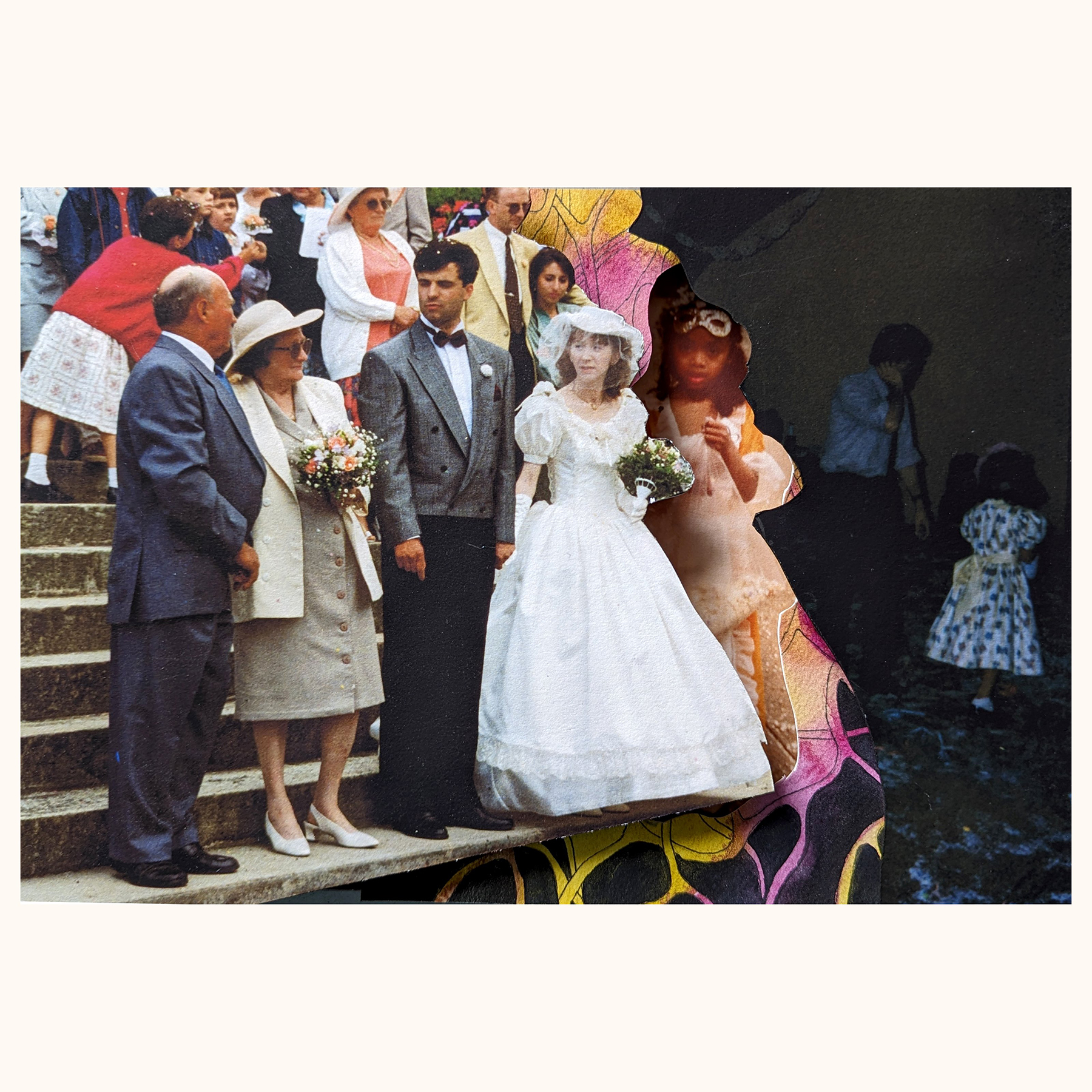
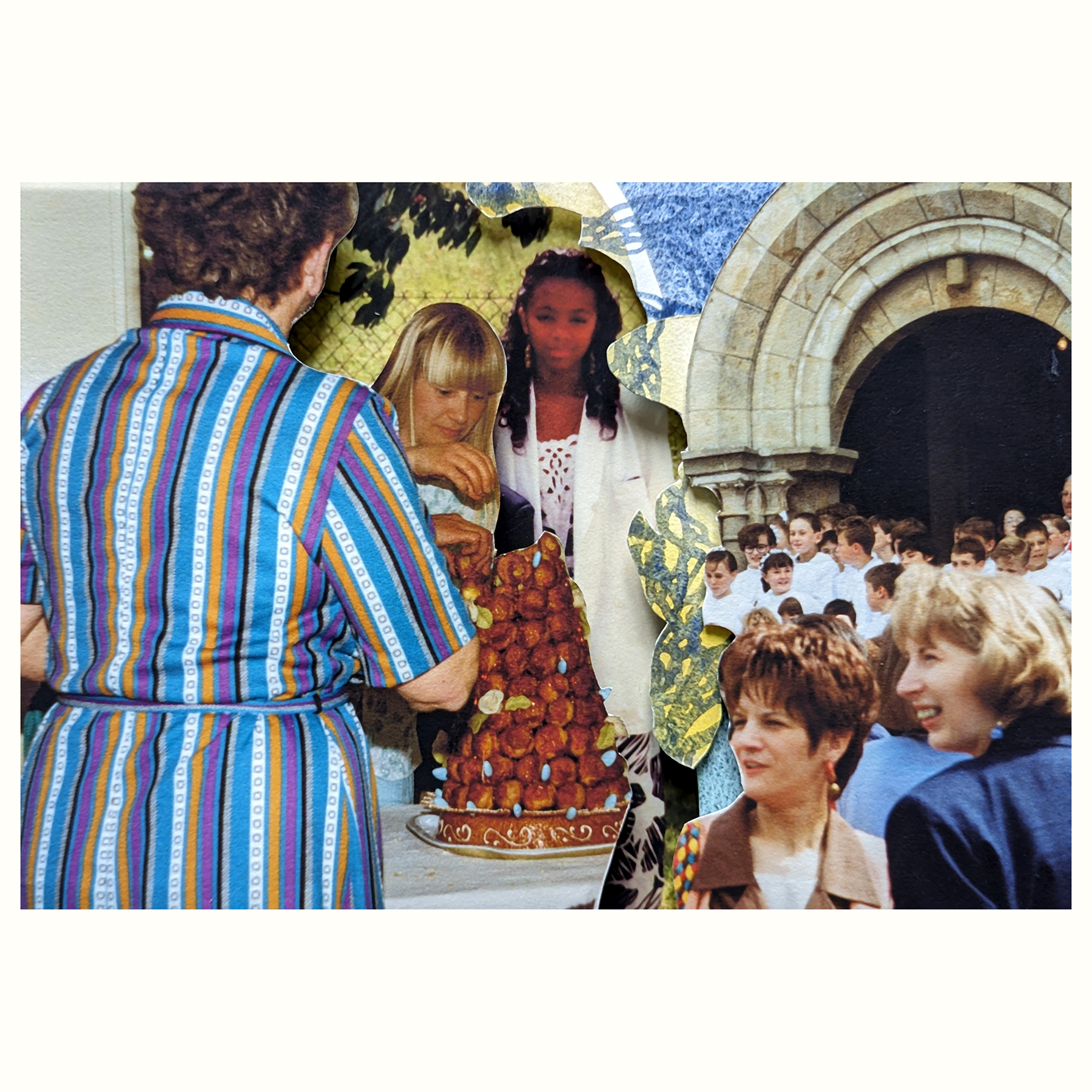
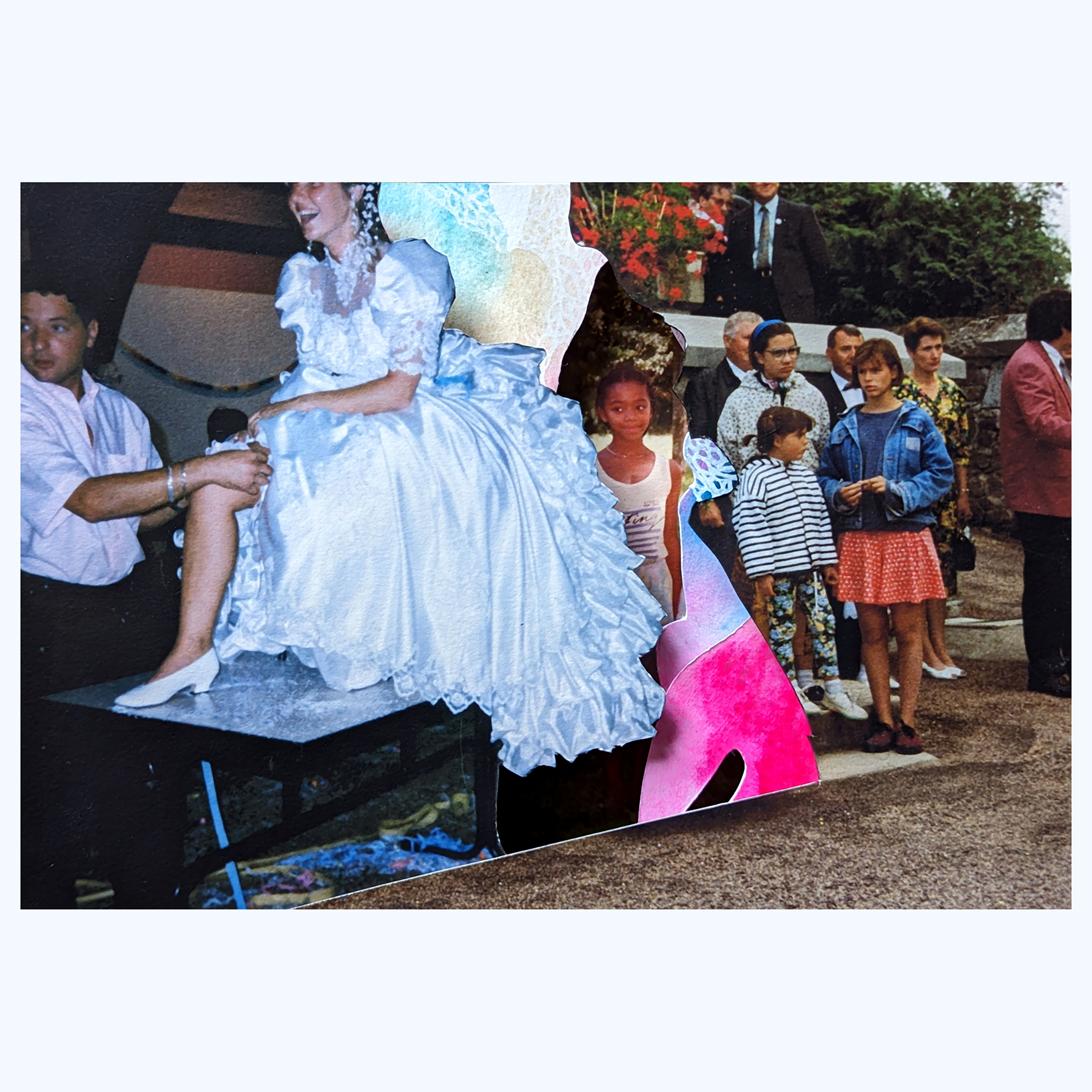
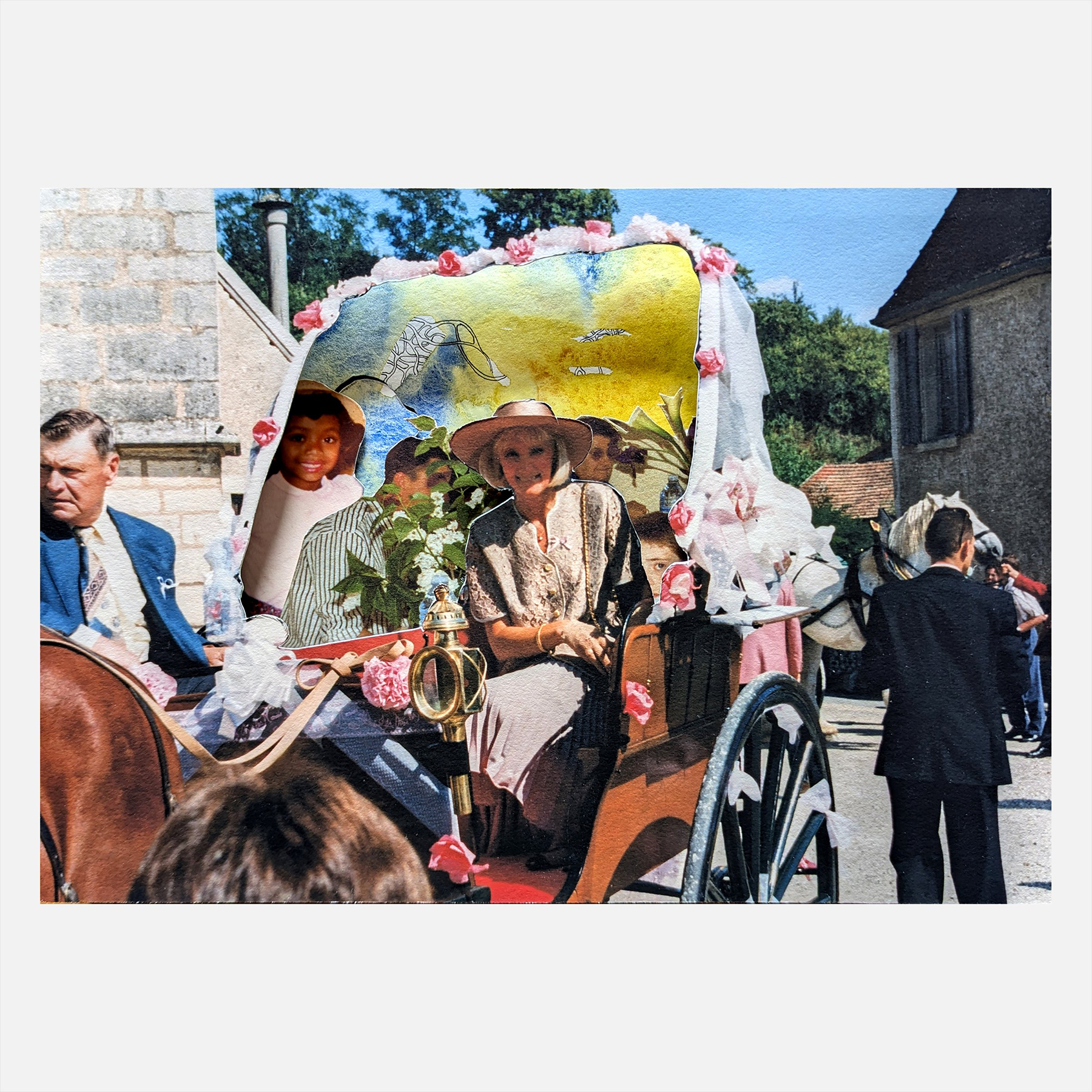
I grew up in a France where these rituals - weddings, communions, Catholic celebrations - were omnipresent. I experienced them as foreign ceremonies. My mother had taught me another way of doing family and celebration: warmer, less codified, more carnal. In those moments, I was the exotic thing for the others. For me, they were the folklore.
Folklore works with this reversal of the gaze, not as revenge but as a child's observation.
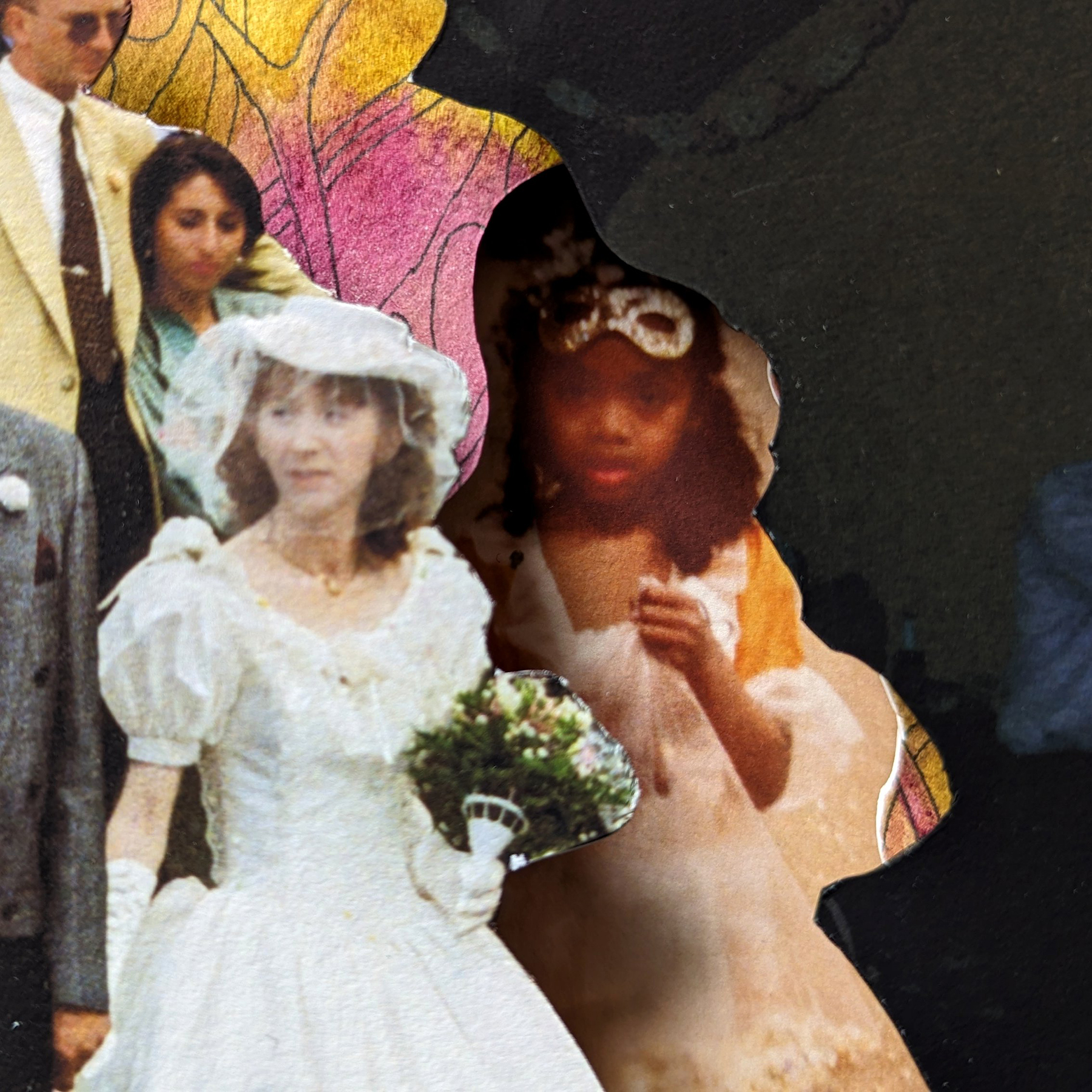
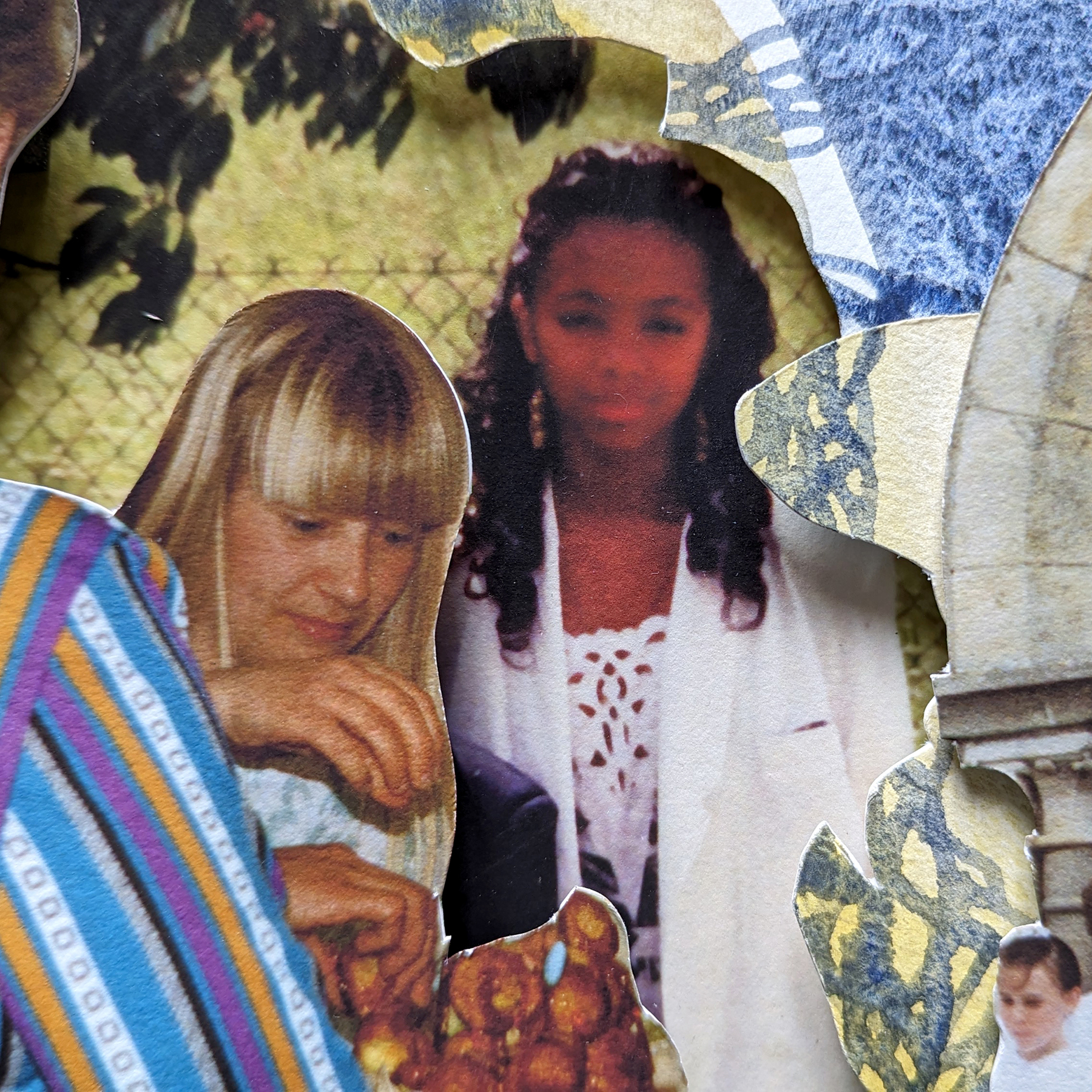
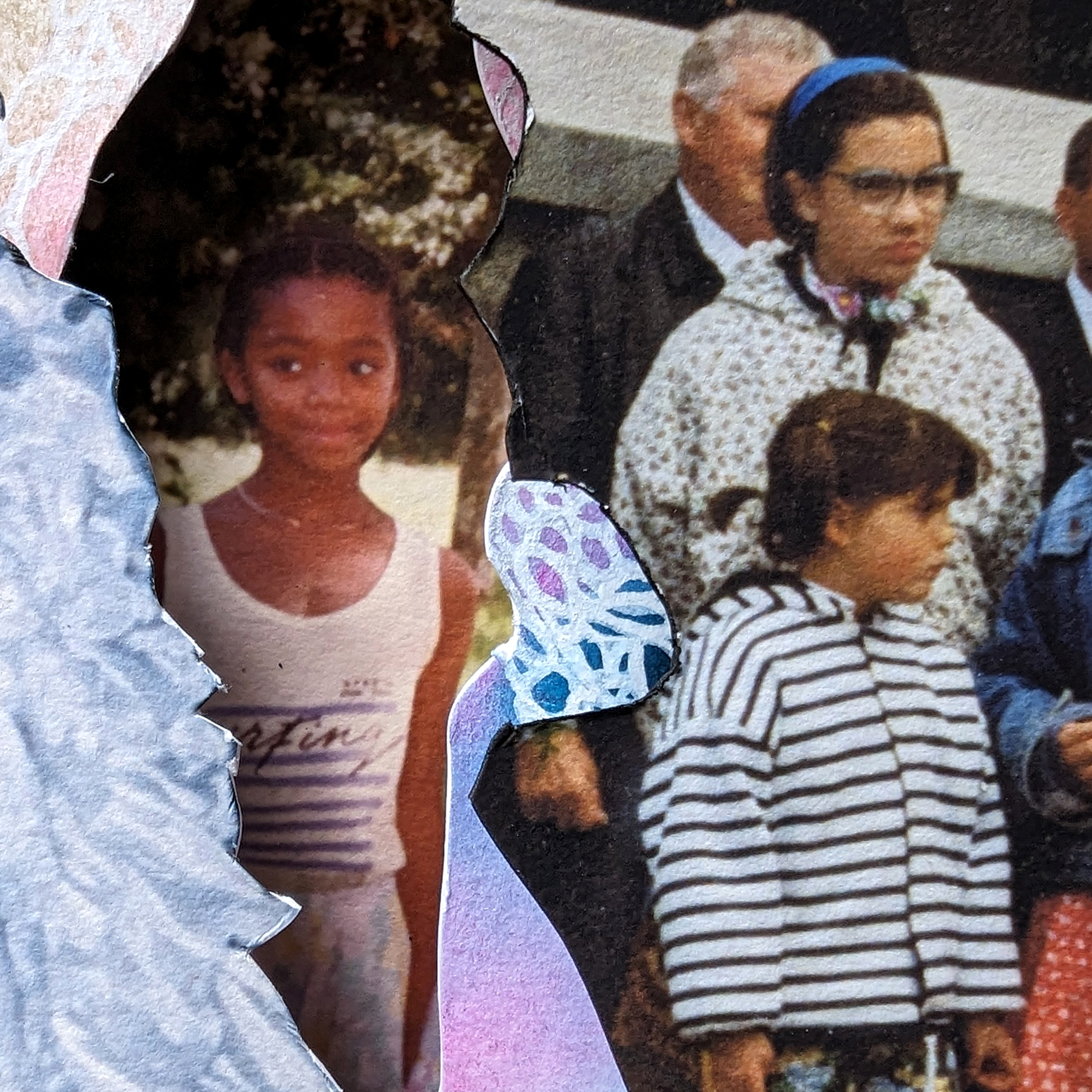
I start with a photograph of a French scene. I cut a silhouette out of the scene and remove it. In its place, or elsewhere in the image, I add a photograph of myself as a child, sometimes anachronistic, taken in another moment. Between this figure and the scene, I paint watercolour shapes that represent my own worlds, inner landscapes that come between me and theirs.
In the pieces, I am present but hidden. At those celebrations, I wanted to disappear and could not. I was visible before I had spoken. Today I put myself back in the scene, but I choose how to appear. The watercolours are the membrane I did not have, back then, to shield me from the gaze of others.